The Coal Yard & other storiesPage 10 |
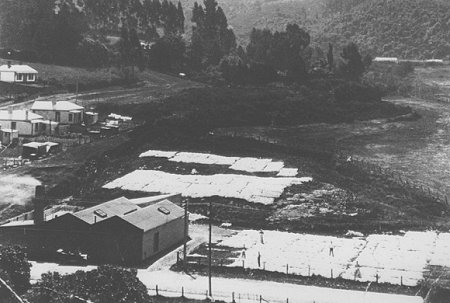
| Earlier I mentioned the wool scour or fellmonger business that belonged to Sandy Ness and his sons Alex and Davie. This set up used water from Fraser's Gully stream for washing the wool. A large ditch was cut around the edge of the paddock to bring the water in. Ness’s had rolls of scrim (light sacking) which they spread in long rows across the field near the buildings and held down with big stones to stop the wind catching it.. The washed wool was spread out on the scrim to dry and in the evening it was all rolled up, wool and all, and brought inside for the night. |
|
|
Later on they got a drier and netting on frames so they could dry the wool indoors. Bill Ellis carted the wool to the wharf. Black wool sold cheap at sales and Sandy sent a whole bale of it to England. Unfortunately it only paid the cost of the carriage. |
 |
HORSES AROUND THE VALLEYGrandad Still (Frederick James Still) worked, as did several of the Still family for the Dunedin City Corporation as it was called then. Frederick worked on the “ash cart” that collected rubbish and the spent ashes from the household coal ranges that were put out onto the street sides each week. Two horses pulled the ash cart, as it was quite a heavy dray when loaded. Fortunately the wheels had roller bearings that made it easier to pull. Norman Ellis recalls that the dray had a rim brake on the hub, which squawked when going down hill. (The brake rubbed on a steel band that was fitted around the hub on the wheels). |
|
Many of the roads and streets in the Kaikorai were steep and made hard work for the horses. One of the steepest was Falcon Street that was first used as the cable car route, but only for a short time. (More on this subject later) To get the horses up Falcon Street, Frederick Still would blindfold the horses and have a block to put behind the wheels to prevent the cart running back. When they were above the halfway point the buckets of ash were brought down from the higher houses to save the horses from the extra hill work. Grandad Still had a great collection of clocks that came from the rubbish collections and his son Jock (Gilbert) took a keen interest in restoring these items. The dray was sold later on to “Welham,” another local carrier whose business continued on into the 1970s?.
Go to Next Page |